

18 June 2026
for Madrid Nuevo Norte



'/%3E%3Cpath fill='%23F71013' d='M133.063 1v5.769L126.337 1h-12.944v5.77L106.667 1H93.723v5.77L86.997 1H73v61h15.937v-5.77L95.663 62h12.944v-5.77l6.726 5.77h12.944v-5.77l6.726 5.77H149V1z'/%3E%3Cpath fill='%23FFF' d='M99 15v9h-2.209v-7.689l-.499 2.109L94.425 24h-2.85l-1.867-5.58-.5-2.07V24H87v-9h3.905l1.61 5.194.485 1.967.485-1.954L95.095 15zM105.818 20.513c0-1.13-.579-1.655-1.81-1.655-1.188 0-1.752.525-1.752 1.655 0 1.104.564 1.63 1.751 1.63 1.232 0 1.811-.526 1.811-1.63zM108 17.135v6.73h-2.256v-1.507c-.416 1.063-1.262 1.642-2.45 1.642-2.122 0-3.294-1.4-3.294-3.487C100 18.4 101.113 17 103.146 17c1.262 0 2.168.592 2.598 1.696v-1.561H108zM114.818 20.352c0-1.183-.579-1.732-1.81-1.732-1.188 0-1.752.55-1.752 1.732 0 1.155.564 1.704 1.751 1.704 1.232 0 1.811-.549 1.811-1.704zM117 14v9.86h-2.256v-1.578c-.416 1.112-1.262 1.718-2.45 1.718-2.121 0-3.294-1.465-3.294-3.648 0-2.211 1.113-3.676 3.146-3.676 1.262 0 2.168.62 2.598 1.775V14H117zM122 17.11v1.943c-.328-.11-.541-.138-.94-.138-.997 0-1.895.496-1.895 2.37V24H117v-6.89h2.165v1.957c.157-1.006.627-2.067 1.966-2.067.228 0 .584 0 .869.11'/%3E%3Cmask id='89zww8pfdd' fill='%23fff'%3E%3Cuse xlink:href='%231de91x7csc'/%3E%3C/mask%3E%3Cpath d='M123.208 24h1.584v-6.685h-1.584V24zM123 15.203c0-.775.354-1.203.99-1.203.645 0 1.01.428 1.01 1.203 0 .802-.365 1.244-1.01 1.244-.636 0-.99-.442-.99-1.244zM131.818 20.352c0-1.183-.579-1.732-1.81-1.732-1.188 0-1.752.55-1.752 1.732 0 1.155.564 1.704 1.751 1.704 1.232 0 1.811-.549 1.811-1.704zM134 14v9.86h-2.256v-1.578c-.416 1.112-1.262 1.718-2.45 1.718-2.122 0-3.294-1.465-3.294-3.648 0-2.211 1.113-3.676 3.146-3.676 1.262 0 2.168.62 2.598 1.775V14H134zM96 27v9h-2.865l-3.382-5.477-.559-1.144V36H87v-9h2.977l3.158 5.104.67 1.26V27zM105 30v6.863h-2.19v-1.551c-.345 1.125-1.094 1.688-2.275 1.688C98.821 37 98 36.026 98 34.008V30h2.19v3.884c0 .838.403 1.222 1.21 1.222.863 0 1.41-.535 1.41-1.77V30H105zM108.216 32.813h2.68c-.014-.982-.435-1.319-1.29-1.319-.856 0-1.277.377-1.39 1.32m4.77 1.332h-4.77c.127.916.576 1.293 1.473 1.293.674 0 .996-.202 1.333-.849l1.824.62c-.477 1.157-1.53 1.79-3.213 1.79-2.174 0-3.633-1.373-3.633-3.446 0-2.127 1.431-3.554 3.563-3.554 2.062 0 3.437 1.373 3.437 3.446 0 .229 0 .404-.014.7' fill='%23FFF' mask='url(%2389zww8pfdd)'/%3E%3Cpath fill='%23FFF' mask='url(%2389zww8pfdd)' d='m120 30-2.72 7h-2.56L112 30h2.399l1.608 5.18 1.595-5.18zM125.765 33.513c0-1.13-.56-1.655-1.765-1.655-1.206 0-1.765.525-1.765 1.655 0 1.104.559 1.63 1.765 1.63s1.765-.526 1.765-1.63m2.235 0c0 2.168-1.823 3.487-4 3.487s-4-1.32-4-3.487c0-2.18 1.823-3.513 4-3.513s4 1.333 4 3.513M96 40v9h-2.865l-3.382-5.477-.559-1.144V49H87v-9h2.977l3.158 5.104.67 1.26V40zM102.765 45.513c0-1.13-.559-1.655-1.765-1.655s-1.765.525-1.765 1.655c0 1.104.559 1.63 1.765 1.63s1.765-.526 1.765-1.63m2.235 0c0 2.168-1.823 3.487-4 3.487s-4-1.32-4-3.487c0-2.18 1.823-3.513 4-3.513s4 1.333 4 3.513M110 42.11v1.943c-.327-.11-.541-.138-.94-.138-.997 0-1.895.496-1.895 2.37V49H105v-6.89h2.165v1.957c.157-1.006.627-2.067 1.966-2.067.228 0 .584 0 .869.11M114.18 43.88v3.264h1.688V49h-1.451c-1.346 0-2.243-.949-2.243-2.372v-2.749H111v-1.856h1.174V40h2.005v2.023H116v1.856h-1.82zM119.216 44.814h2.68c-.014-.983-.435-1.32-1.29-1.32-.856 0-1.277.377-1.39 1.32m4.77 1.332h-4.77c.127.916.576 1.293 1.473 1.293.674 0 .996-.202 1.333-.849l1.824.62c-.477 1.157-1.53 1.79-3.213 1.79-2.174 0-3.633-1.373-3.633-3.446 0-2.127 1.43-3.554 3.563-3.554 2.062 0 3.437 1.373 3.437 3.446 0 .23 0 .404-.014.7'/%3E%3C/g%3E%3C/svg%3E)
Bridges, whether more or less aesthetic, more or less technically complex or merely functional, form part of the landscape of almost all major cities. Their mission seems simple: to overcome an obstacle (a river, a road, a railway line…) and connect two points on the map which would otherwise remain separated. However, throughout history, these infrastructures have demonstrated their potential to play a much richer role in urban life. Beyond their function as mere places of passage, some bridges have become spaces where people stop, look or participate in different activities. In them we find shops, galleries, pedestrian promenades or even green areas which extend the natural landscape over the structure itself. In other words, these are bridges which not only stitch the city together, but also help build it, creating new places for encounter and urban experience and accommodating new functions.
A cultural passage on the daily route
In the Chinese city of Jishou, a bridge demonstrates that everyday infrastructure can also become a cultural space integrated into urban life. This is the Lianxin Bridge, a pedestrian structure crossing the Wanrong River, designed by studio Atelier FCJZ. The project draws inspiration from traditional Chinese covered bridges, characterised by their protective roofs, though reinterpreted with a contemporary architectural language. The result is an elongated structure which integrates naturally into the urban and river landscape. Its uniqueness lies in its organisation across two levels, where the upper level is dominated by a large concrete arch housing an art gallery conceived to bring contemporary creation into citizens’ daily lives. Below it, the lower level, formed by an open steel structure, functions as a covered street and allows pedestrians to pass through, protected from sun or rain. The bridge also incorporates various complementary spaces (lobby, offices, a small shop, a tea room and rest areas with stepped podiums) which invite visitors to stop and enjoy the surroundings. The idea is to integrate culture into people’s daily journey and transform crossing the river into a richer urban experience, connected to a neighbourhood where housing, commercial establishments and restaurants already coexist.
In the Chinese city of Jishou, a bridge also serves as a cultural container, housing an art gallery, the Jishou Art Museum (JAM). Photo: Atelier FCJZ
This concept is not unique in the world, as other bridges internationally also house museums, such as the Norwegian The Twist, designed by the renowned architecture studio BIG, or the Yusuhara Museum-Bridge in Japan, designed by the equally celebrated architect Kengo Kuma. Though there’s no need to travel to northern Europe or Asia to see a museum-bridge. There is a spectacular example much closer to us. We refer to the bridge-pavilion in Zaragoza, designed by another laureate architect, Zaha Hadid.
Built for Expo Zaragoza 2008, and measuring 260 metres in length, its organic layout evokes the silhouette of a gladiolus laid across the River Ebro: a stem which starts from one bank and opens into three structural “pods” upon reaching the other. This complex geometry is not merely formal, but allows exhibition spaces to be housed within the bridge itself, transforming the river crossing into an architectural and urban experience.
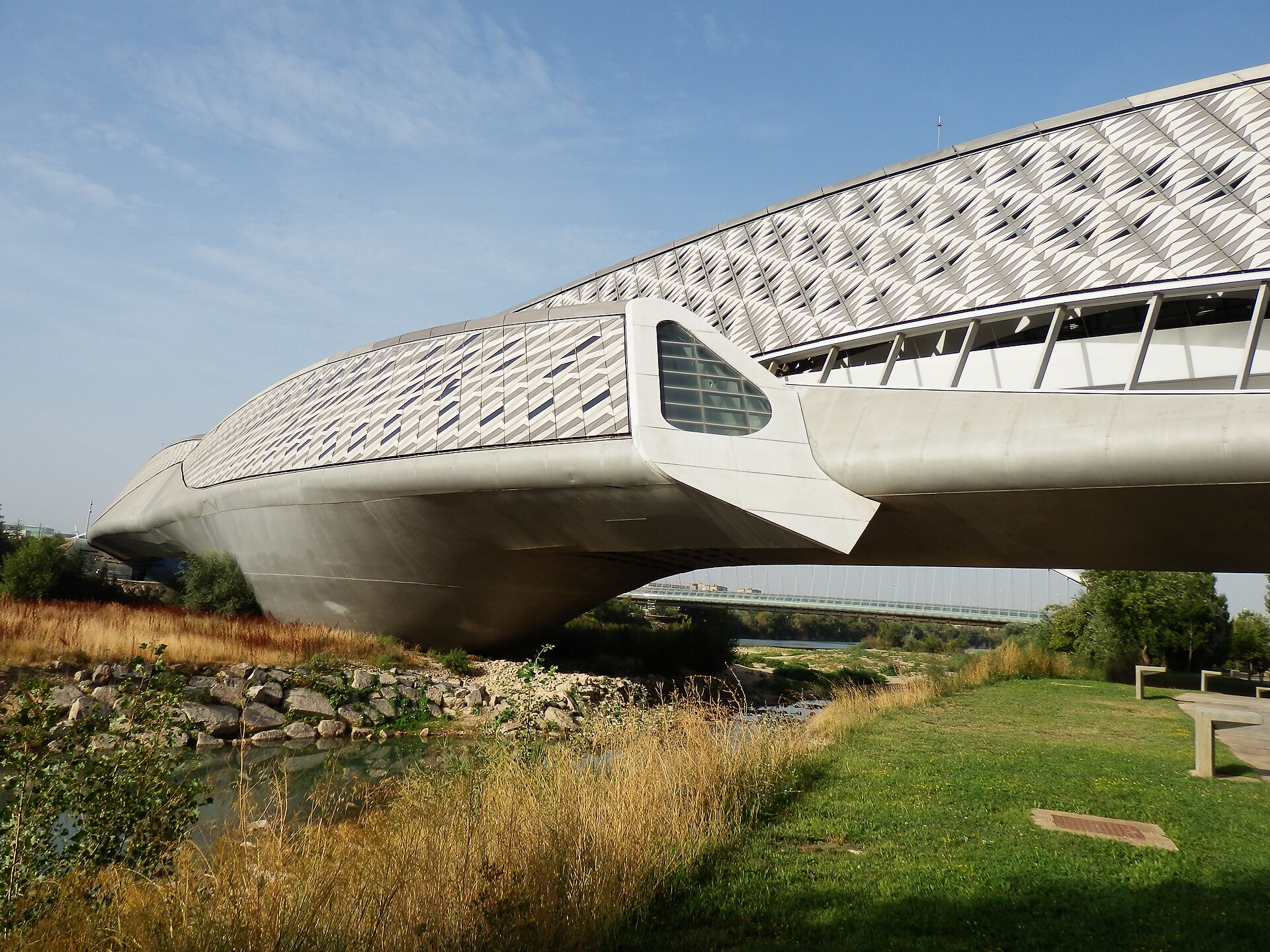
Puente museo en Zaragoza, obra de la extinta arquitecta Zaha Hadid y de la ingeniería Arup. Foto: Ajzh2074
Bridge museum in Zaragoza, designed by the late architect Zaha Hadid and engineering firm Arup. Photo: Ajzh2074
Shopping and socialising on a bridge
Commerce is one of the activities which has brought the most life to bridges throughout history, when these infrastructures also became authentic commercial streets suspended over water. The best-known example is the Ponte Vecchio in Florence. Street musicians, tourists and small shops enliven this busy 14th-century bridge spanning the River Arno, making it one of the most photographed places in the city. In its origins, the small hanging houses lining both sides of the bridge were occupied by the butchers’ guild, whose activities and aromas formed part of the everyday landscape. Over time, and especially after the court moved to the nearby Palazzo Pitti, the profile of the tenants changed. The butchers were replaced by jewellers and goldsmiths, artisans considered more fitting for the presence of nobility in the area. That decision ultimately defined the bridge’s current identity, which is still occupied by small jewellery shops today.
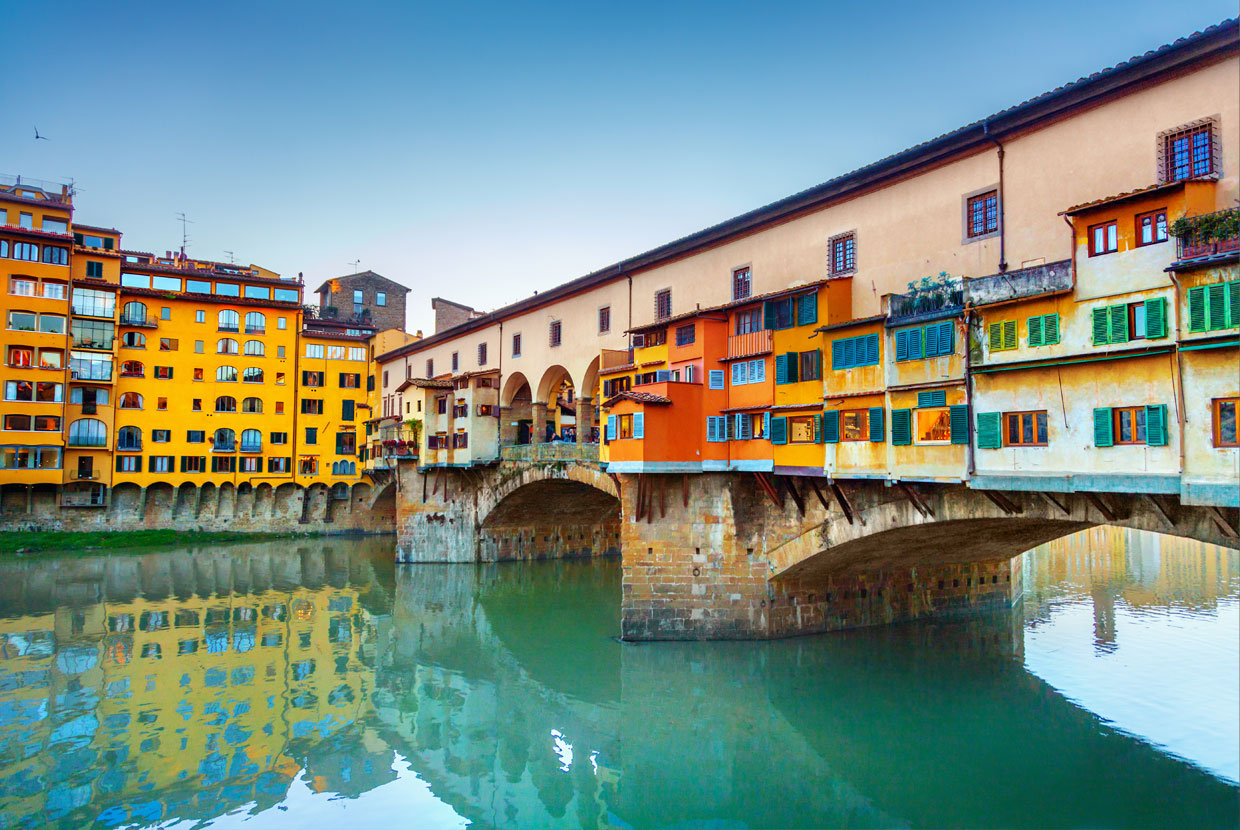
El Ponte Vecchio, en Florencia.
The Ponte Vecchio in Florence.
But the famous Florentine bridge was even more complex, as it housed an even more surprising use. To avoid mingling with the crowds crossing the bridge, the Medici family commissioned architect Giorgio Vasari to construct the unique Vasari Corridor, an exclusive elevated passage which allowed them to move discreetly between Palazzo Pitti and Palazzo Vecchio, passing above the shops and the multitude. Thus, the Ponte Vecchio connected two banks of the Arno, but also two very different social worlds within the same city.
Bridges are not only capable of housing commerce and culture. Today, so-called ecoducts are already a reality—naturalised infrastructures which span roads, railway lines or other urban barriers without breaking the continuity of green spaces. The objective of these structures is to reconnect fragmented ecosystems, allowing vegetation to expand and fauna to move more easily.
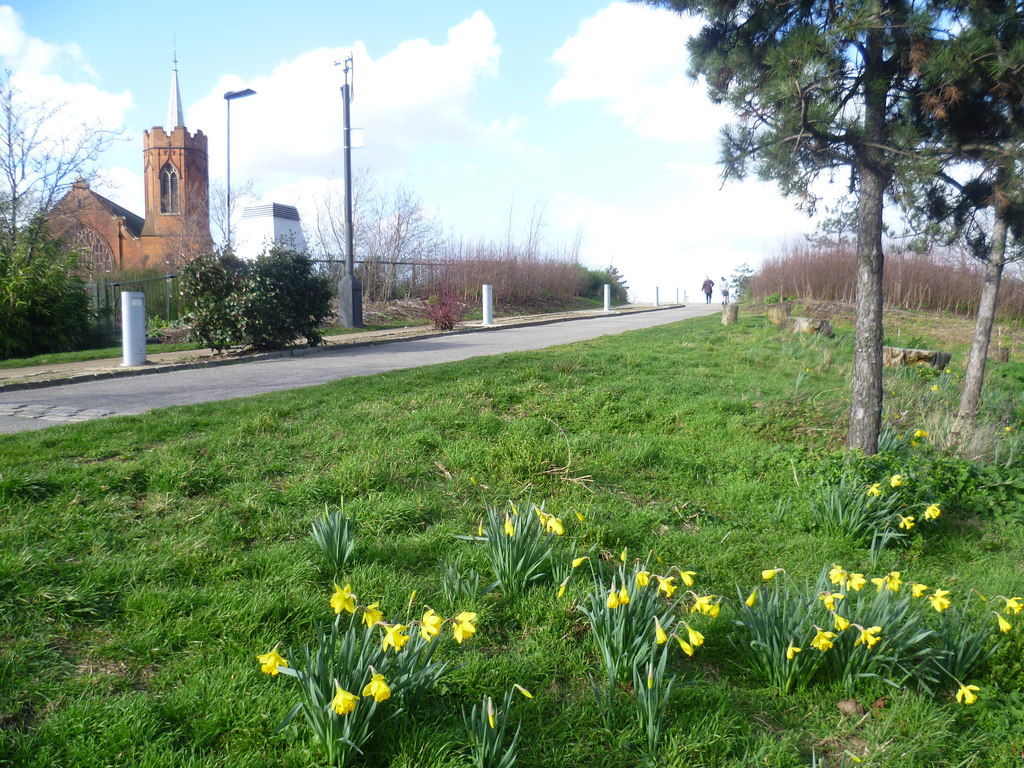
As surprising as it may seem, this is a bridge over a road. It connects two parks in the Mile End neighbourhood of London. (Photo: Marathon, geograph.org.uk)
A good example in the European urban context is the Green Bridge Mile End, built in the 1990s in London. This landscaped footbridge was designed to resolve the fragmentation of Mile End Park, which had been divided by several roads and railway viaducts. The bridge, designed for pedestrians and cyclists, allows them to cross these infrastructures without leaving the green landscape, providing continuity to the park which runs parallel to Regent’s Canal.
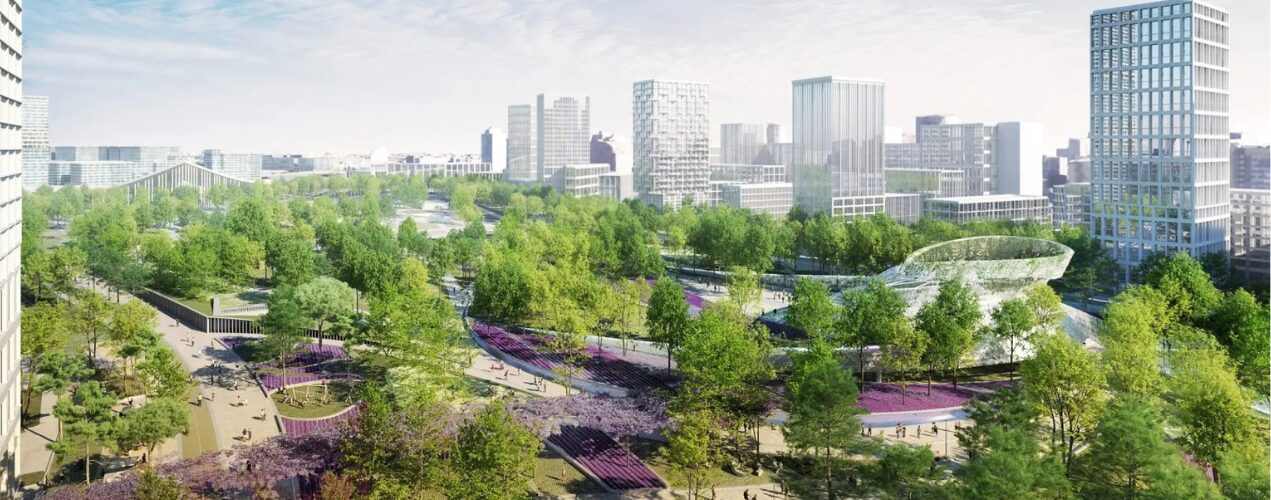
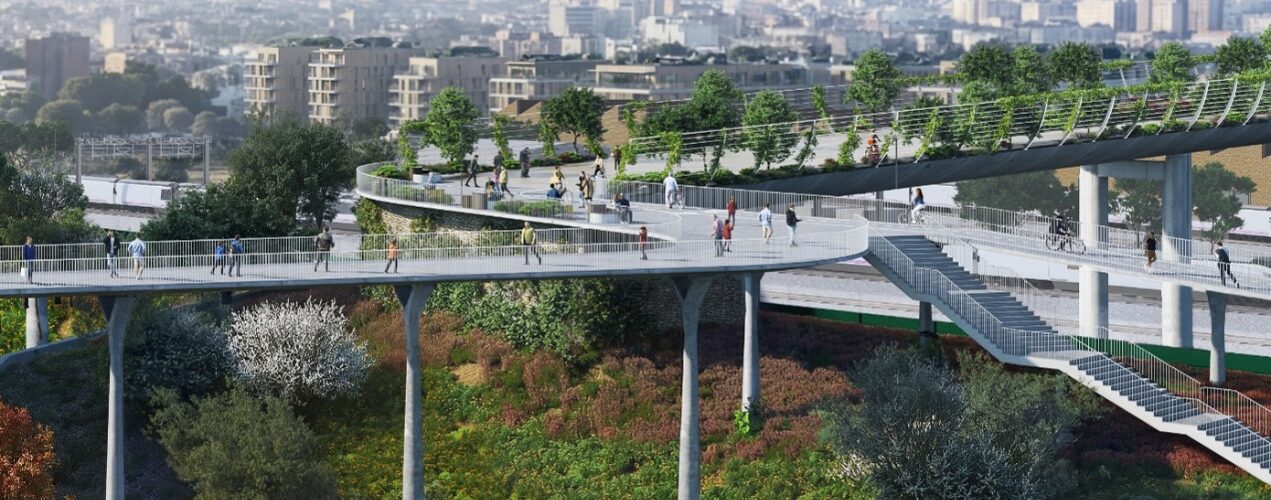
This type of urban solution will be developed in Madrid with the Madrid Metropolitan Forest project, which aims to create a large green ring of approximately 75 kilometres around the capital. This natural belt, which will take shape through the planting of more than 100,000 native trees and the recovery of wasteland, will also include several “green bridges” designed to span existing infrastructure such as motorways or major roads. These connections will be fundamental to ensuring the ecological continuity of the whole and transforming the forest ring into a network of interconnected natural spaces, accessible both to biodiversity and to citizens. And connected to this new ring, within Madrid Nuevo Norte, emphasis has been placed on the naturalisation of bridges to transform them into pleasant places for walking or cycling, with shade and rest areas.
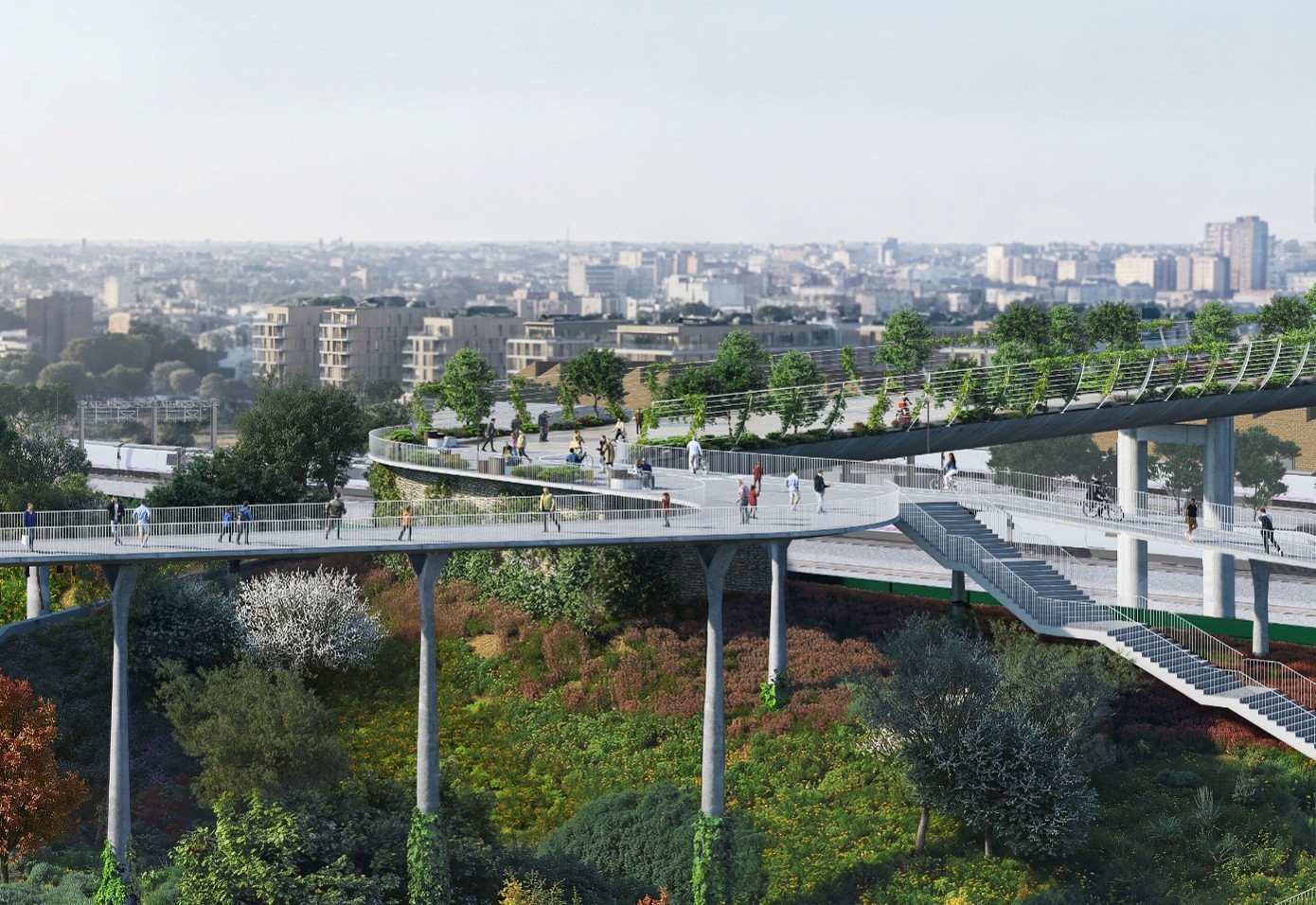
Recreación de pasarela peatonal sobre las vías del tren en Madrid Nuevo Norte, pensada para generar espacios verdes, zonas de descanso y sombra.
Rendering of a pedestrian footbridge over the railway lines in Madrid Nuevo Norte, designed to create green spaces, rest areas and shade.
In Serbia, in the city of Novi Sad, we find one of those projects which explore how far the contemporary idea of an urban bridge can go. Studio ARCVS has conceived the Elbow Shadow Bridge, a mixed-use infrastructure inspired both by the industrial aesthetic of the local port and by an old footbridge which spanned the moat of a nearby historic fortress. The result is a project which combines historical memory and contemporary architecture to imagine a new public space over the river.
Although not yet built, the bridge is conceived as an authentic multifunctional space suspended over the Danube, closer to a small linear neighbourhood than a simple crossing infrastructure. It will be organised across two clearly differentiated levels: the upper level, fully glazed, will house a hotel and offices which take advantage of the open views towards the river landscape. The lower level will be dedicated to pedestrian and cyclist mobility, who will be able to cross while enjoying a panoramic route over the Danube. The bridge will incorporate a fitness space, small shops and a café open to the river, becoming a place to stop, socialise or simply contemplate the landscape.
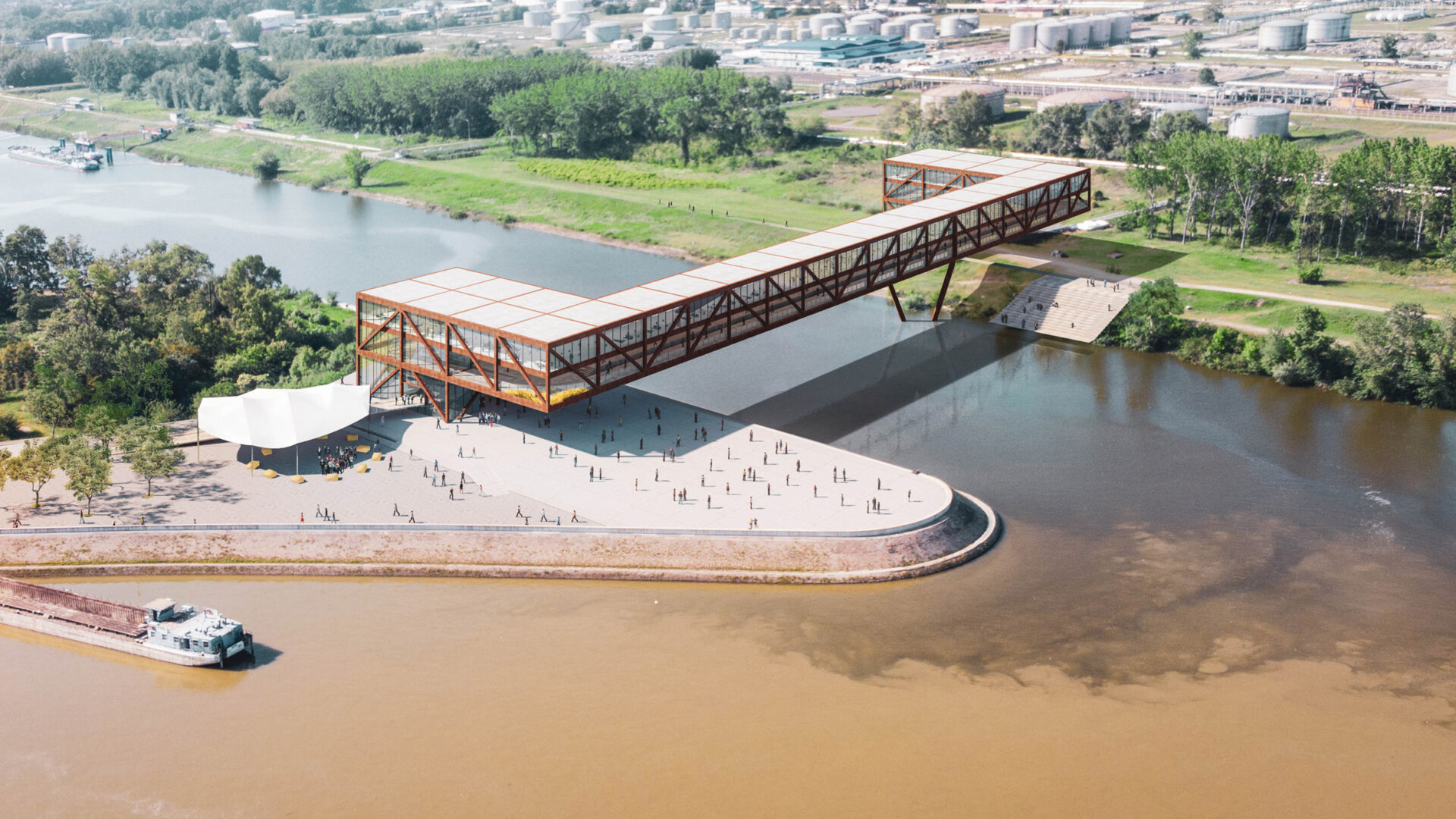
El Elbow Shadow Bridge, en Serbia, acogerá múltiples usos (Foto: ARCVS)
The Elbow Shadow Bridge in Serbia will accommodate multiple uses (Photo: ARCVS)