

10 June 2026
for Madrid Nuevo Norte



'/%3E%3Cpath fill='%23F71013' d='M133.063 1v5.769L126.337 1h-12.944v5.77L106.667 1H93.723v5.77L86.997 1H73v61h15.937v-5.77L95.663 62h12.944v-5.77l6.726 5.77h12.944v-5.77l6.726 5.77H149V1z'/%3E%3Cpath fill='%23FFF' d='M99 15v9h-2.209v-7.689l-.499 2.109L94.425 24h-2.85l-1.867-5.58-.5-2.07V24H87v-9h3.905l1.61 5.194.485 1.967.485-1.954L95.095 15zM105.818 20.513c0-1.13-.579-1.655-1.81-1.655-1.188 0-1.752.525-1.752 1.655 0 1.104.564 1.63 1.751 1.63 1.232 0 1.811-.526 1.811-1.63zM108 17.135v6.73h-2.256v-1.507c-.416 1.063-1.262 1.642-2.45 1.642-2.122 0-3.294-1.4-3.294-3.487C100 18.4 101.113 17 103.146 17c1.262 0 2.168.592 2.598 1.696v-1.561H108zM114.818 20.352c0-1.183-.579-1.732-1.81-1.732-1.188 0-1.752.55-1.752 1.732 0 1.155.564 1.704 1.751 1.704 1.232 0 1.811-.549 1.811-1.704zM117 14v9.86h-2.256v-1.578c-.416 1.112-1.262 1.718-2.45 1.718-2.121 0-3.294-1.465-3.294-3.648 0-2.211 1.113-3.676 3.146-3.676 1.262 0 2.168.62 2.598 1.775V14H117zM122 17.11v1.943c-.328-.11-.541-.138-.94-.138-.997 0-1.895.496-1.895 2.37V24H117v-6.89h2.165v1.957c.157-1.006.627-2.067 1.966-2.067.228 0 .584 0 .869.11'/%3E%3Cmask id='89zww8pfdd' fill='%23fff'%3E%3Cuse xlink:href='%231de91x7csc'/%3E%3C/mask%3E%3Cpath d='M123.208 24h1.584v-6.685h-1.584V24zM123 15.203c0-.775.354-1.203.99-1.203.645 0 1.01.428 1.01 1.203 0 .802-.365 1.244-1.01 1.244-.636 0-.99-.442-.99-1.244zM131.818 20.352c0-1.183-.579-1.732-1.81-1.732-1.188 0-1.752.55-1.752 1.732 0 1.155.564 1.704 1.751 1.704 1.232 0 1.811-.549 1.811-1.704zM134 14v9.86h-2.256v-1.578c-.416 1.112-1.262 1.718-2.45 1.718-2.122 0-3.294-1.465-3.294-3.648 0-2.211 1.113-3.676 3.146-3.676 1.262 0 2.168.62 2.598 1.775V14H134zM96 27v9h-2.865l-3.382-5.477-.559-1.144V36H87v-9h2.977l3.158 5.104.67 1.26V27zM105 30v6.863h-2.19v-1.551c-.345 1.125-1.094 1.688-2.275 1.688C98.821 37 98 36.026 98 34.008V30h2.19v3.884c0 .838.403 1.222 1.21 1.222.863 0 1.41-.535 1.41-1.77V30H105zM108.216 32.813h2.68c-.014-.982-.435-1.319-1.29-1.319-.856 0-1.277.377-1.39 1.32m4.77 1.332h-4.77c.127.916.576 1.293 1.473 1.293.674 0 .996-.202 1.333-.849l1.824.62c-.477 1.157-1.53 1.79-3.213 1.79-2.174 0-3.633-1.373-3.633-3.446 0-2.127 1.431-3.554 3.563-3.554 2.062 0 3.437 1.373 3.437 3.446 0 .229 0 .404-.014.7' fill='%23FFF' mask='url(%2389zww8pfdd)'/%3E%3Cpath fill='%23FFF' mask='url(%2389zww8pfdd)' d='m120 30-2.72 7h-2.56L112 30h2.399l1.608 5.18 1.595-5.18zM125.765 33.513c0-1.13-.56-1.655-1.765-1.655-1.206 0-1.765.525-1.765 1.655 0 1.104.559 1.63 1.765 1.63s1.765-.526 1.765-1.63m2.235 0c0 2.168-1.823 3.487-4 3.487s-4-1.32-4-3.487c0-2.18 1.823-3.513 4-3.513s4 1.333 4 3.513M96 40v9h-2.865l-3.382-5.477-.559-1.144V49H87v-9h2.977l3.158 5.104.67 1.26V40zM102.765 45.513c0-1.13-.559-1.655-1.765-1.655s-1.765.525-1.765 1.655c0 1.104.559 1.63 1.765 1.63s1.765-.526 1.765-1.63m2.235 0c0 2.168-1.823 3.487-4 3.487s-4-1.32-4-3.487c0-2.18 1.823-3.513 4-3.513s4 1.333 4 3.513M110 42.11v1.943c-.327-.11-.541-.138-.94-.138-.997 0-1.895.496-1.895 2.37V49H105v-6.89h2.165v1.957c.157-1.006.627-2.067 1.966-2.067.228 0 .584 0 .869.11M114.18 43.88v3.264h1.688V49h-1.451c-1.346 0-2.243-.949-2.243-2.372v-2.749H111v-1.856h1.174V40h2.005v2.023H116v1.856h-1.82zM119.216 44.814h2.68c-.014-.983-.435-1.32-1.29-1.32-.856 0-1.277.377-1.39 1.32m4.77 1.332h-4.77c.127.916.576 1.293 1.473 1.293.674 0 .996-.202 1.333-.849l1.824.62c-.477 1.157-1.53 1.79-3.213 1.79-2.174 0-3.633-1.373-3.633-3.446 0-2.127 1.43-3.554 3.563-3.554 2.062 0 3.437 1.373 3.437 3.446 0 .23 0 .404-.014.7'/%3E%3C/g%3E%3C/svg%3E)
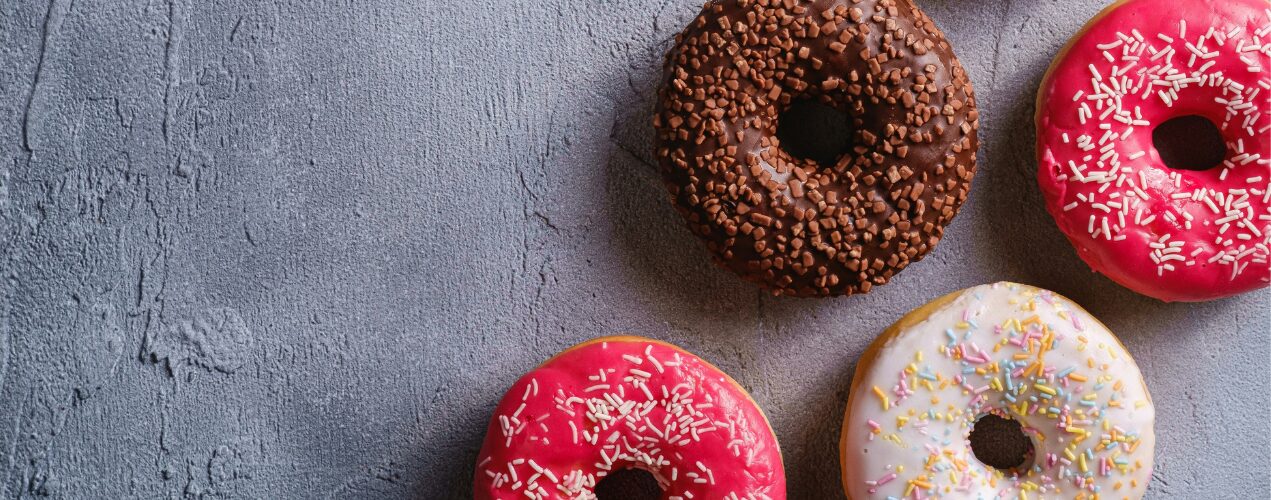
At first glance, something as trivial and everyday as a doughnut would seem to have little to do with urban planning. And yet, its shape has become one of the most evocative metaphors for rethinking how 21st-century cities can function. Behind this image lies an idea as intuitive as it is transformative: understanding human activity—and therefore the city—as a space for balanced growth, capable of guaranteeing the basic conditions for a full life without losing sight of care for the environment. An approach opening the possibility of imagining more liveable, fairer cities which are better prepared to respond to the challenges of our time. In recent years, this way of understanding urban planning has been gaining traction by proposing a more complete vision of urban progress. It is no longer just about cities being bigger, faster or more productive, but also about them being kinder, more inclusive and more aware of the resources which make community life possible.
The so-called doughnut economics, developed by economist Kate Raworth, was born as a clear and visual way of addressing an increasingly urgent question: how can we advance without depleting the resources on which we depend? Her approach is based on a simple image. The inner circle represents the basic needs which every person should have met in order to lead a dignified life, such as access to drinking water, food, health or education. The outer circle, in turn, marks the environmental and social limits which should not be exceeded if we want to avoid further deterioration of the planet. Between the two lies the desirable space—a band of equilibrium where it is possible to guarantee the well-being of the population without compromising the environment.
Therein lies the strength of this theory, which does not seek to offer a closed formula or a universal model applicable in the same way in all contexts. Rather, it proposes a useful guide for ordering priorities, rethinking decisions and viewing development—including urban development—with a broader and more conscious perspective.
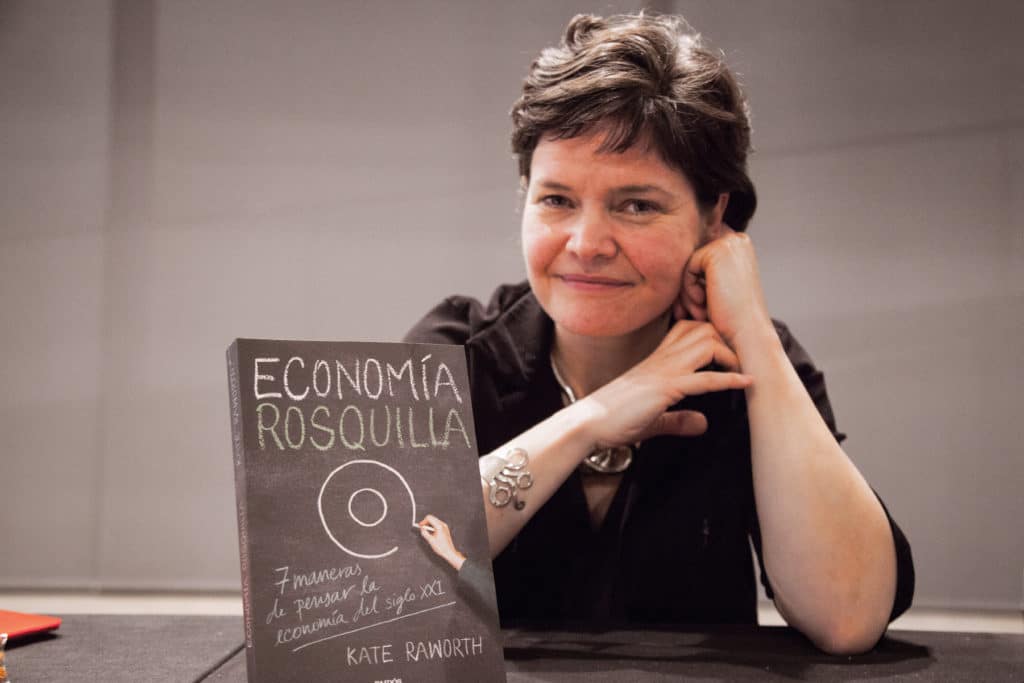
Behind this proposal is Kate Raworth, a British economist who has worked in various international organisations and has developed a brilliant career in academia. Her approach starts from a simple question: does it make sense to measure progress solely in terms of economic growth? From that question, Raworth developed a model focusing on people and the environment. Her work has resonated in different fields, from economics to urban planning, precisely because of its ability to translate complex ideas into easily understandable images. Raworth does not propose total solutions, but rather a different way of looking at problems: instead of focusing only on how much an economy grows, she invites us to observe how resources are distributed and what impact that growth has on people’s lives. This cross-cutting perspective has enabled her model to be used as a guide in different contexts, such as urban planning.
Kate Raworth, the economist who developed the doughnut theory. (Photo: atlasofthefuture.org)
In the urban sphere, the doughnut model has been gaining ground because it connects with very concrete concerns: access to housing, daily mobility, air quality or the proximity of services. In other words, with everything which shapes the daily experience of living in a city. Its contribution is particularly useful because it translates a complex debate into an easy-to-understand image: the ideal city would be one capable of guaranteeing well-being and opportunities for its inhabitants without exceeding environmental limits. A balanced space which translates into closer, more liveable neighbourhoods, where basic services are within reach, and where walking, cycling or using public transport are not an exception but a natural part of daily life; a place where green spaces contribute both to well-being and to climate adaptation. More than a theoretical image, the doughnut functions here as a compass for making urban decisions with a broader perspective.