

8 May 2026
for Madrid Nuevo Norte



'/%3E%3Cpath fill='%23F71013' d='M133.063 1v5.769L126.337 1h-12.944v5.77L106.667 1H93.723v5.77L86.997 1H73v61h15.937v-5.77L95.663 62h12.944v-5.77l6.726 5.77h12.944v-5.77l6.726 5.77H149V1z'/%3E%3Cpath fill='%23FFF' d='M99 15v9h-2.209v-7.689l-.499 2.109L94.425 24h-2.85l-1.867-5.58-.5-2.07V24H87v-9h3.905l1.61 5.194.485 1.967.485-1.954L95.095 15zM105.818 20.513c0-1.13-.579-1.655-1.81-1.655-1.188 0-1.752.525-1.752 1.655 0 1.104.564 1.63 1.751 1.63 1.232 0 1.811-.526 1.811-1.63zM108 17.135v6.73h-2.256v-1.507c-.416 1.063-1.262 1.642-2.45 1.642-2.122 0-3.294-1.4-3.294-3.487C100 18.4 101.113 17 103.146 17c1.262 0 2.168.592 2.598 1.696v-1.561H108zM114.818 20.352c0-1.183-.579-1.732-1.81-1.732-1.188 0-1.752.55-1.752 1.732 0 1.155.564 1.704 1.751 1.704 1.232 0 1.811-.549 1.811-1.704zM117 14v9.86h-2.256v-1.578c-.416 1.112-1.262 1.718-2.45 1.718-2.121 0-3.294-1.465-3.294-3.648 0-2.211 1.113-3.676 3.146-3.676 1.262 0 2.168.62 2.598 1.775V14H117zM122 17.11v1.943c-.328-.11-.541-.138-.94-.138-.997 0-1.895.496-1.895 2.37V24H117v-6.89h2.165v1.957c.157-1.006.627-2.067 1.966-2.067.228 0 .584 0 .869.11'/%3E%3Cmask id='89zww8pfdd' fill='%23fff'%3E%3Cuse xlink:href='%231de91x7csc'/%3E%3C/mask%3E%3Cpath d='M123.208 24h1.584v-6.685h-1.584V24zM123 15.203c0-.775.354-1.203.99-1.203.645 0 1.01.428 1.01 1.203 0 .802-.365 1.244-1.01 1.244-.636 0-.99-.442-.99-1.244zM131.818 20.352c0-1.183-.579-1.732-1.81-1.732-1.188 0-1.752.55-1.752 1.732 0 1.155.564 1.704 1.751 1.704 1.232 0 1.811-.549 1.811-1.704zM134 14v9.86h-2.256v-1.578c-.416 1.112-1.262 1.718-2.45 1.718-2.122 0-3.294-1.465-3.294-3.648 0-2.211 1.113-3.676 3.146-3.676 1.262 0 2.168.62 2.598 1.775V14H134zM96 27v9h-2.865l-3.382-5.477-.559-1.144V36H87v-9h2.977l3.158 5.104.67 1.26V27zM105 30v6.863h-2.19v-1.551c-.345 1.125-1.094 1.688-2.275 1.688C98.821 37 98 36.026 98 34.008V30h2.19v3.884c0 .838.403 1.222 1.21 1.222.863 0 1.41-.535 1.41-1.77V30H105zM108.216 32.813h2.68c-.014-.982-.435-1.319-1.29-1.319-.856 0-1.277.377-1.39 1.32m4.77 1.332h-4.77c.127.916.576 1.293 1.473 1.293.674 0 .996-.202 1.333-.849l1.824.62c-.477 1.157-1.53 1.79-3.213 1.79-2.174 0-3.633-1.373-3.633-3.446 0-2.127 1.431-3.554 3.563-3.554 2.062 0 3.437 1.373 3.437 3.446 0 .229 0 .404-.014.7' fill='%23FFF' mask='url(%2389zww8pfdd)'/%3E%3Cpath fill='%23FFF' mask='url(%2389zww8pfdd)' d='m120 30-2.72 7h-2.56L112 30h2.399l1.608 5.18 1.595-5.18zM125.765 33.513c0-1.13-.56-1.655-1.765-1.655-1.206 0-1.765.525-1.765 1.655 0 1.104.559 1.63 1.765 1.63s1.765-.526 1.765-1.63m2.235 0c0 2.168-1.823 3.487-4 3.487s-4-1.32-4-3.487c0-2.18 1.823-3.513 4-3.513s4 1.333 4 3.513M96 40v9h-2.865l-3.382-5.477-.559-1.144V49H87v-9h2.977l3.158 5.104.67 1.26V40zM102.765 45.513c0-1.13-.559-1.655-1.765-1.655s-1.765.525-1.765 1.655c0 1.104.559 1.63 1.765 1.63s1.765-.526 1.765-1.63m2.235 0c0 2.168-1.823 3.487-4 3.487s-4-1.32-4-3.487c0-2.18 1.823-3.513 4-3.513s4 1.333 4 3.513M110 42.11v1.943c-.327-.11-.541-.138-.94-.138-.997 0-1.895.496-1.895 2.37V49H105v-6.89h2.165v1.957c.157-1.006.627-2.067 1.966-2.067.228 0 .584 0 .869.11M114.18 43.88v3.264h1.688V49h-1.451c-1.346 0-2.243-.949-2.243-2.372v-2.749H111v-1.856h1.174V40h2.005v2.023H116v1.856h-1.82zM119.216 44.814h2.68c-.014-.983-.435-1.32-1.29-1.32-.856 0-1.277.377-1.39 1.32m4.77 1.332h-4.77c.127.916.576 1.293 1.473 1.293.674 0 .996-.202 1.333-.849l1.824.62c-.477 1.157-1.53 1.79-3.213 1.79-2.174 0-3.633-1.373-3.633-3.446 0-2.127 1.43-3.554 3.563-3.554 2.062 0 3.437 1.373 3.437 3.446 0 .23 0 .404-.014.7'/%3E%3C/g%3E%3C/svg%3E)

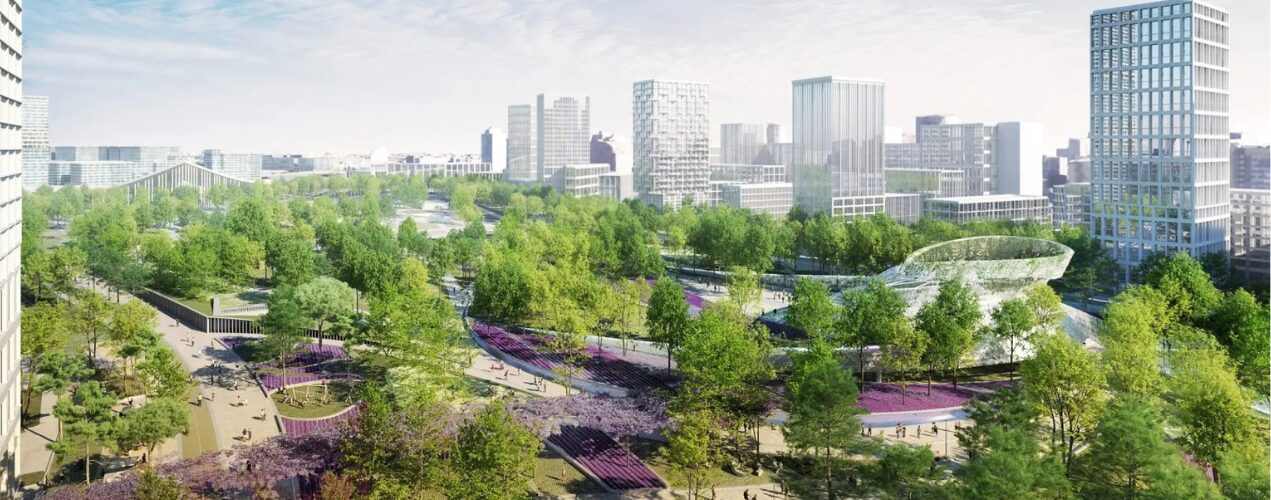
Madrid hosted the 2026 edition of the Council on Vertical Urbanism (CVU) Europe Conference, an international event bringing together professionals from urban planning, architecture, engineering, real estate development and public administrations to reflect on density and vertical urbanism in contemporary cities, where Madrid Nuevo Norte played a significant role in the debate of ideas and proposals developed at the congress.
The event positioned the city of Madrid—and, notably, Madrid Nuevo Norte—as one of the key references. In the words of Shonn Mills, chairman of the CVU, the capital is a city which “handles density in an elegant way” and the “epicentre of this densification is, precisely, Madrid Nuevo Norte”. According to him, the city is providing, with its vision for the future, solutions to major challenges such as mobility and access to housing.
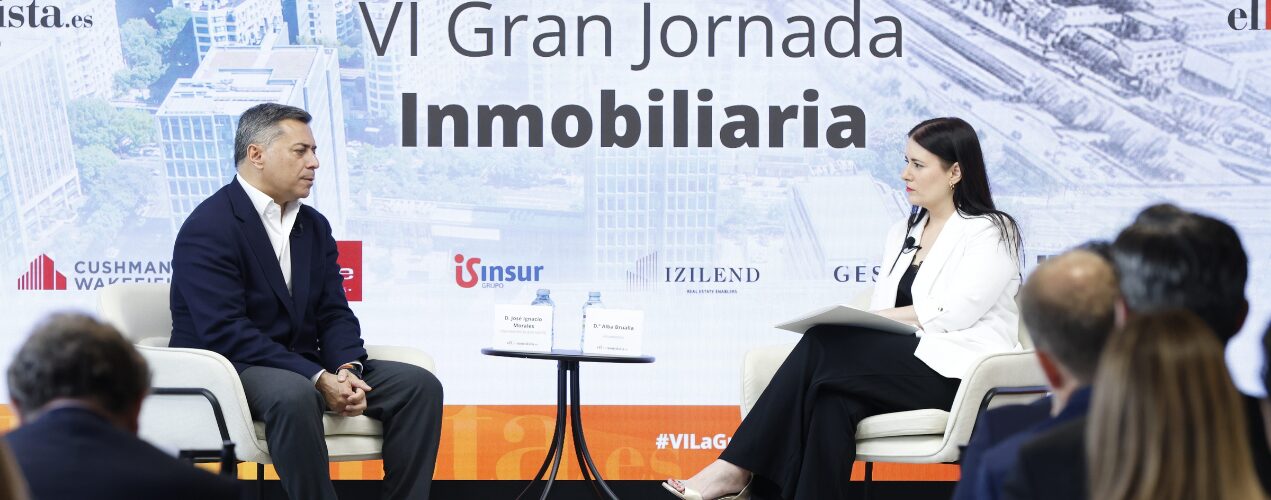
In this context, Miguel Hernández, Director of the Strategy and Corporate Development Area at Crea Madrid Nuevo Norte (CreaMNN), participated in the congress with the presentation “Madrid Nuevo Norte: Vertical Urbanism as City-Making”, in which he outlined the project’s approach to density and height as the result of a collective process responding to urban needs, rather than as objectives in themselves.
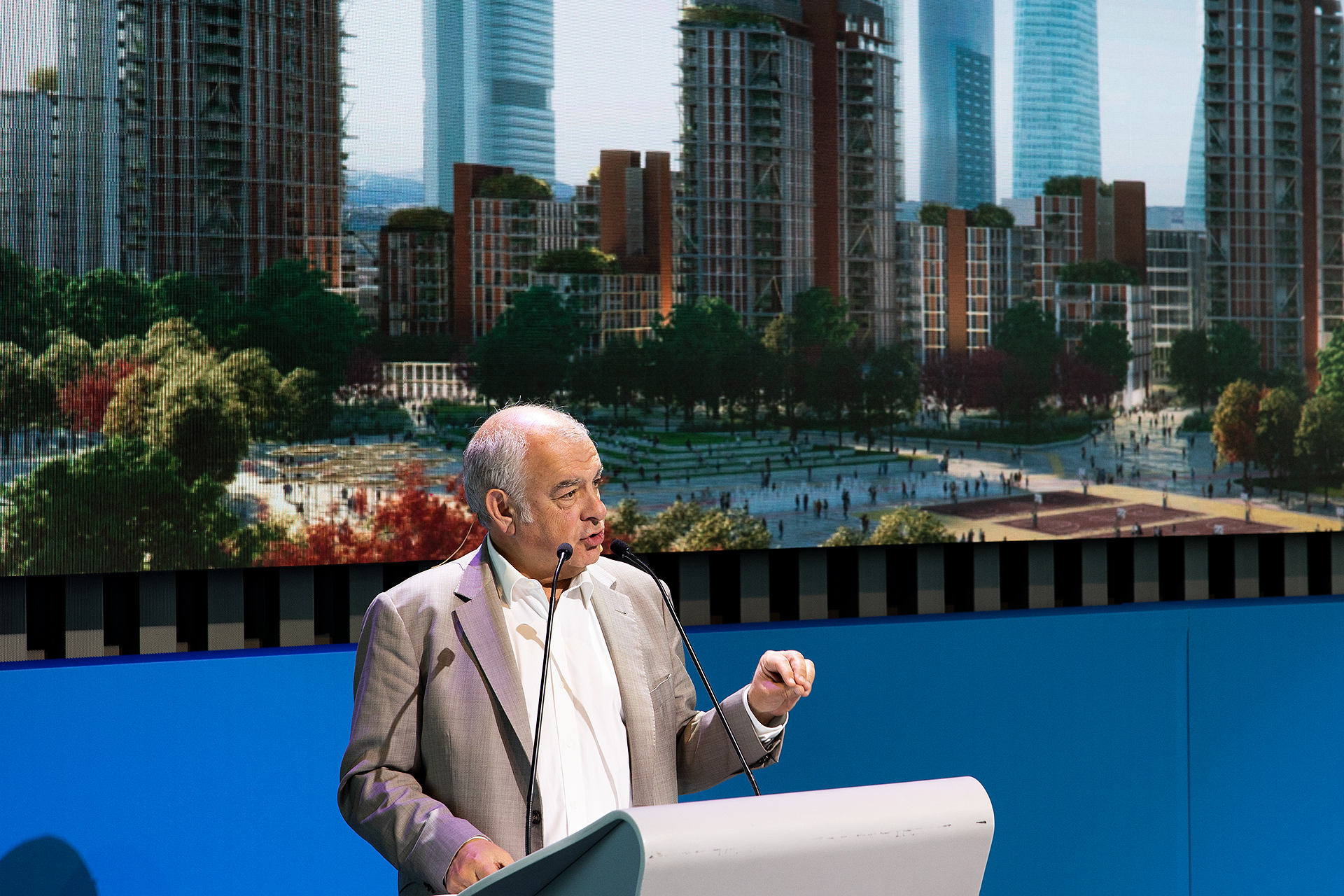
The presentation began with a reflection on the motivations which have led to building upward throughout history. For centuries, Hernández explained, verticality responded fundamentally to a symbolic logic: towers, cathedrals or pagodas acted as manifestations of religious or political power. However, he explained, “this model changes from the 19th century onwards, when the combination of technical advances and the concentration of private capital turns height into an economic operation, with this phenomenon beginning in cities such as New York or Chicago”. “Skyscrapers”, he continued, “therefore allow the use of high-value land to be multiplied, but they also create cities largely defined by partial interests, often disconnected from public space and from the functioning of the city as a whole”.
According to Hernández, today, in our current context, “vertical urbanism can no longer respond solely to the logic of a single agent, but must address the needs of the city as a whole, understood as the society whichinhabits it“. “This requires new governance frameworks, based on public-private coordination and participation processes allowing broad consensus to be built, as has been developed in Madrid Nuevo Norte, where densities and heights are the result of these processes“, he stated.
One of the central themes of the presentation was to emphasise that vertical urbanism is not merely the sum of tall buildings. Hernández illustrated how, in the mid-20th century, a significant advance occurred with towers such as the Lever House or the Seagram Building in New York, which introduced a new relationship with public space by freeing up the ground floor and creating open plazas. At the same time, he highlighted the failed experience of other high-density models lacking adequate urban structure—such as Le Corbusier’s “tower in the park”—stressing that “height alone does not create cities nor guarantee liveable environments”.
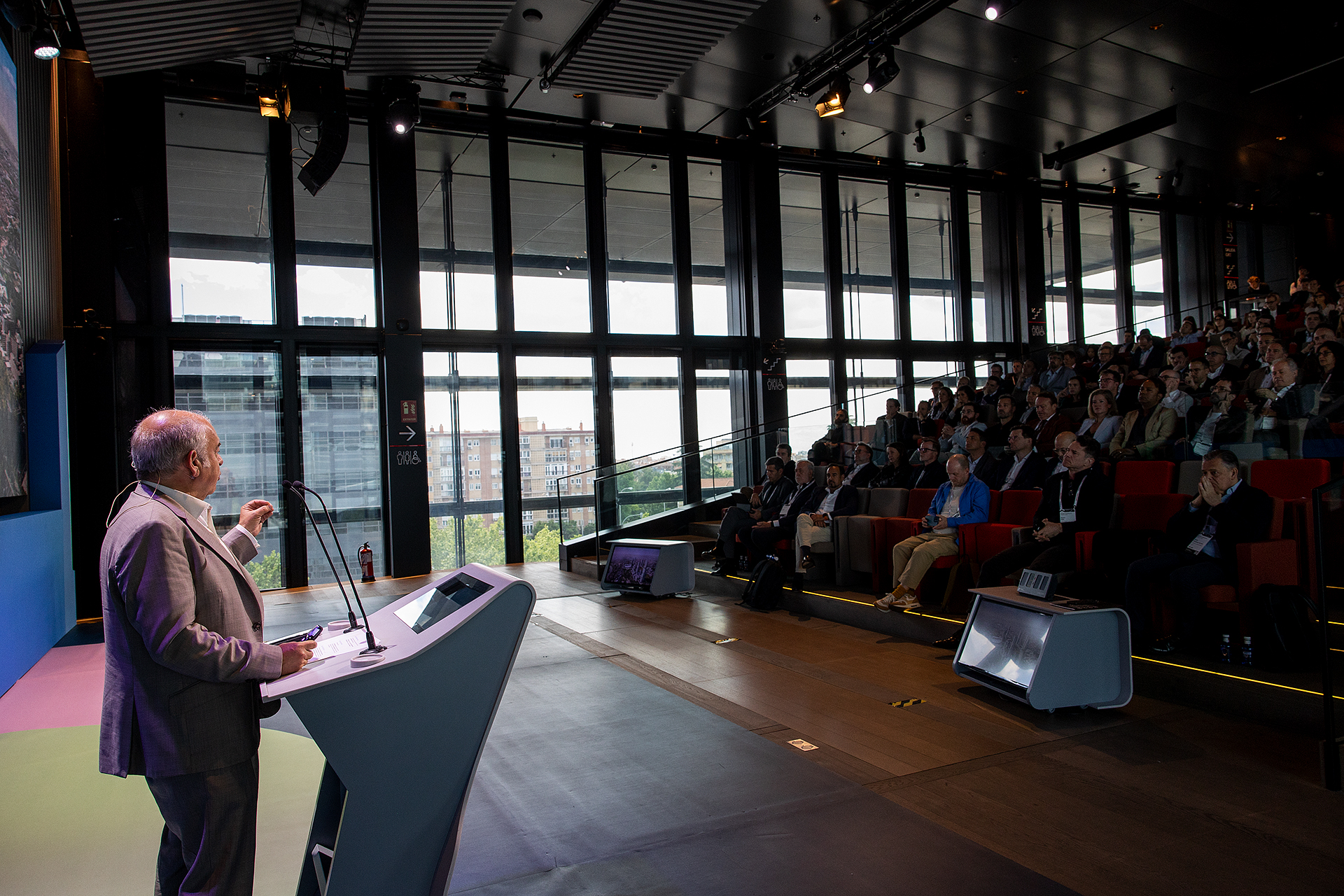
Building on this overview, the presentation positioned Madrid Nuevo Norte within a contemporary paradigm seeking a model where what matters “is not how much can be built, but how what is built contributes to the urban system“.
Hernández highlighted that, although the project will incorporate internationally significant high-rise buildings, exceeding 300 metres, “height is not conceived as an end in itself nor as an isolated iconic element, but as a tool at the service of a more compact, efficient and connected city concept”.
As the CreaMNN Strategy Director explained, “although density enables economies of scale, reduces distances and favours walkable environments, the design of Madrid Nuevo Norte assumes from the outset that these factors alone do not guarantee a balanced ecosystem”. Equally important, he added, “is mixed uses, so that housing, offices and ground-floor commercial use coexist to ensure activity throughout the day and avoid the functional voids and “dead” hours historically associated with single-use districts”.
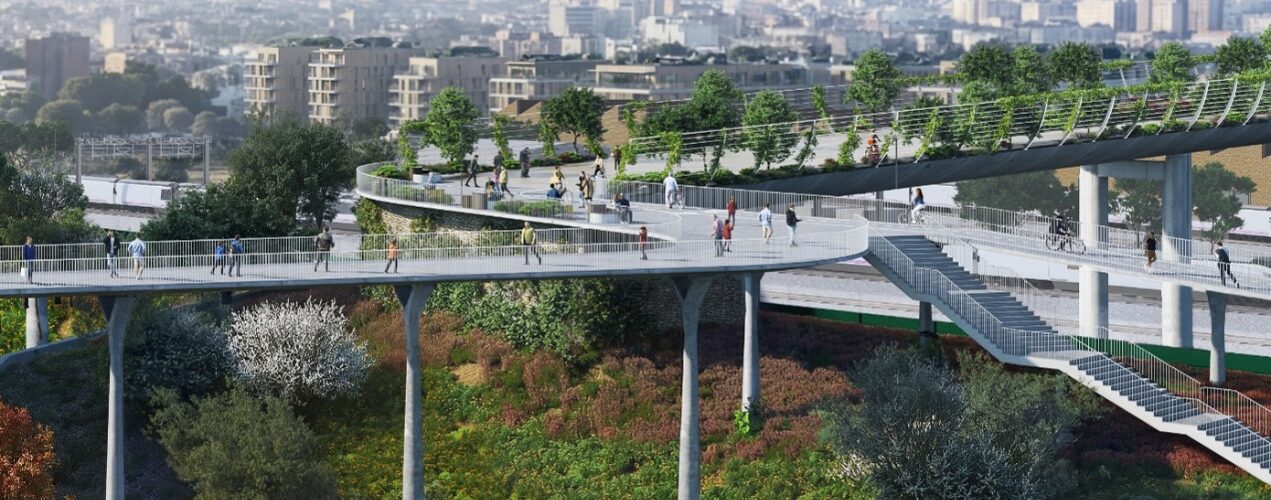
Hernández also pointed to mobility as the other key element of a balanced city. “Density only works if it is supported by an efficient public transport system, as Madrid Nuevo Norte proposes, with a high-connectivity network at local, metropolitan, national and international scale”. “This”, he explained, “complements the idea of the “15-minute city” with a broader vision of the metropolitan region, also creating a “45-minute region”.
To conclude, the CreaMNN Strategy Director emphasised the crucial importance of consensus in Madrid Nuevo Norte, which has allowed the current project to be “the result of a process based on institutional agreements, multidisciplinary planning, citizen participation and intensive public-private coordination”.
“This approach”, concluded Hernández, “has made it possible to adapt the density and height to the actual conditions of the surroundings and to our shared objectives, prioritising urban quality and meeting the needs of Madrid’s residents”.